( For simplicity, we neglected property tax, property owner's insurance, and HOA costs on each example.) Let's state you concern the table with a deposit of 20% to prevent PMI and you finance the staying $160,000 with a 5/1 variable-rate mortgage at a preliminary rate of interest of 3.25%. You 'd start out paying $696 a month for principal and interest.
By the last year, your payment is up to $990, and you 'd pay $147,962 in interest over the life of the loan. Amount You Pay Above Original Purchase Price $696$ 990 $307,962 $147,962 With a minimum deposit of just 3.5% on a 30-year loan at 3.75% interest, your regular monthly payment would amount to $1,031.
You 'd also pay $3,378 in upfront MIP at closing and $128,774 in interest over the life of the loan. Quantity You Pay Above Original Purchase Rate $1,031 $374,366 $181,366 Let's say you put no cash down on http://zanderfiou473.huicopper.com/how-do-reverse-mortgages-work-wikipedia-can-be-fun-for-anyone a 30-year mortgage at 3.5% interest. For this example, we'll assume your VA financing charge is $4,300 and you finance it into your loan because you don't have any additional money on hand.
Amount You Pay Above Original Purchase Rate $917 $330,263 $130,263 If you put 5% down and finance the rest with a at 3.875% interest, you'll pay $893 a month in principal and interest, plus PMI, which we'll determine at 0.5% (or $79/month) for this example. Your overall interest paid would concern $131,642 by the time your home mortgage is done, and your PMI would instantly drop off after a little over 8.5 years.
That saves you anywhere from $85,000 to $107,000 in interest charges alone! Envision what you might achieve with that sort Visit this page of cash in your pocket! Amount You Pay Above Original Purchase Rate $1,115 $240,624 $40,624 If we stack these five mortgage alternatives against each other, it's easy to see where the costs include up.
Indicators on What Is The Maximum Number Of Mortgages You Should Know
Now that you understand the math, don't get a house with a home loan that'll squash your monetary dreams. To assist get the process began, link with our friends at. They're a trusted lending institution who really believes in debt-free homeownership. After that, make sure and connect with a who will keep your finest interests in mind and concentrate on serving you first in your search for the ideal house.
Purchasing a home is exciting, however finding out the financing side of things can feel overwhelming. Chin up: Choosing among the various kinds of mortgage isn't all that agonizing if you know the terminology. Once you have actually done some research and pin down a budget plan and deposit amount, and you have actually evaluated your credit, you'll have a much better idea of what loan works best for your needs.
A standard home mortgage is a mortgage that's not guaranteed by the federal government. There are 2 kinds of conventional loans: adhering and non-conforming loans. A conforming loan merely indicates the loan quantity falls within maximum limitations set by Fannie Mae or Freddie Mac, the government-sponsored business (GSEs) that back a lot of U.S.
The types of home loan that don't meet these standards are considered non-conforming loans. Jumbo loans, which represent large home mortgages above the limits set by Fannie and Freddie for various counties, are the most typical kind of non-conforming loan. Usually, lenders require you to pay personal mortgage insurance on lots of conventional loans when you put down less than 20 percent of the home's purchase price.
This suggests the home rate goes beyond federal loan limits. For 2020, the maximum adhering loan limitation for single-family houses in the majority of the U.S. is $510,400. In certain high-cost areas, the ceiling is $765,600. Jumbo loans are more typical in higher-cost areas, and normally require more thorough documentation to qualify.
10 Easy Facts About What Bank Keeps Its Own Mortgages Shown
Jumbo borrowers must have Learn more good to outstanding credit, a high income and a significant down payment. Numerous respectable loan providers provide jumbo loans at competitive rates. blank have criminal content when hacking regarding mortgages. You can utilize Bankrate's calculator to figure out just how much you can afford to invest in a house. The U.S. government isn't a home loan lender, but it does contribute in helping more Americans end up being house owners.
Department of Agriculture (USDA loans) and the U.S. Department of Veterans Affairs (VA loans). Backed by the FHA, these kinds of mortgage assist make homeownership possible for debtors who don't have a large down payment saved up and do not have beautiful credit. Customers require a minimum FICO score of 580 to get the FHA maximum of 96.5 percent funding with a 3.5 percent deposit; nevertheless, a score of 500 is accepted if you put at least 10 percent down.
This can increase the total expense of your home loan. USDA loans help moderate- to low-income debtors purchase houses in rural locations. You need to acquire a house in a USDA-eligible area and meet certain income limitations to certify. Some USDA loans do not need a down payment for qualified borrowers with low earnings.
military (active duty and veterans) and their households. VA loans do not need a deposit or PMI, and closing expenses are usually topped and might be paid by the seller. A funding charge is charged on VA loans as a portion of the loan quantity to help offset the program's cost to taxpayers.
They assist you fund a home when you don't qualify for a conventional loan Credit requirements are more relaxed You do not require a large deposit They're open to repeat and novice buyers Anticipate to pay necessary home mortgage insurance coverage premiums that can not be canceled on some loans You'll have greater total borrowing expenses Anticipate to supply more documentation, depending upon the loan type, to show eligibility Government-insured loans are perfect if you have low money savings, less-than-stellar credit and can't get approved for a traditional loan.
Little Known Facts About Mortgages What Will That House Cost.
Fixed-rate home mortgages keep the very same rate of interest over the life of your loan, which implies your month-to-month mortgage payment constantly stays the same. Fixed loans generally are available in terms of 15 years, 20 years or thirty years. Your monthly principal and interest payments stay the very same throughout the life of the loan You can more specifically spending plan other expenses month to month You'll generally pay more interest with a longer-term loan It takes longer to develop equity in your house.
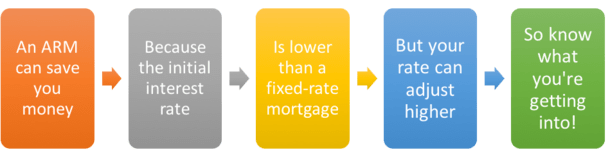
Unlike the stability of fixed-rate loans, adjustable-rate home loans (ARMs) have changing interest rates that can increase or down with market conditions. Many ARM items have a set rates of interest for a couple of years prior to the loan modifications to a variable interest rate for the remainder of the term. Look for an ARM that caps just how much your interest rate or regular monthly home mortgage rate can increase so you don't wind up in financial problem when the loan resets.
If you don't plan to stay in your house beyond a couple of years, an ARM could conserve you big on interest payments. In addition to these common type of mortgages, there are other types you might discover when looking around for a loan. These include: If you wish to build a house, a building loan can be an excellent option.