Table of ContentsIndicators on Which Type Of Organization Does Not Provide Home Mortgages? You Need To KnowWhy Do Mortgage Companies Sell Mortgages Things To Know Before You BuyFascination About Non-federal Or Chartered Banks Who Broker Or Lend For Mortgages Must Be Registered WithHow How Do Escrow Accounts Work For Mortgages can Save You Time, Stress, and Money.
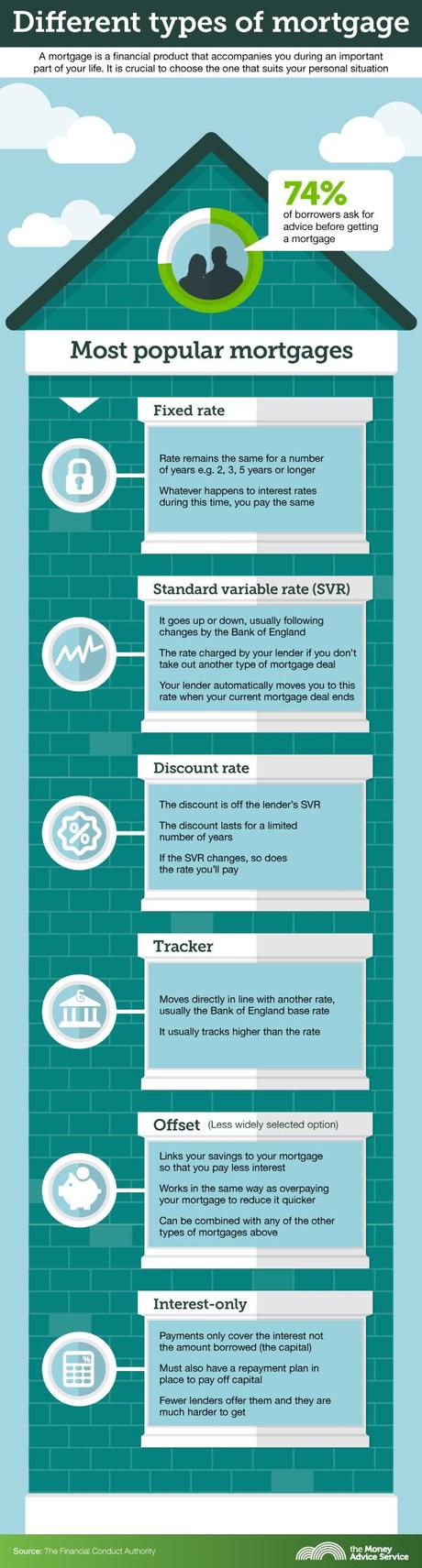
A fixed-rate home mortgage needs the debtor to pay the same rates of interest throughout the duration of the loan. Due to the fact that of this, property buyers will be able to avoid changing market trends. For the most part, this style of mortgage comes with either a 15- or 30-year term. Some lending institutions may have exclusive terms, however.
Then, depending on market adjustments, your rate will change generally on an annual basis. That makes ARMs significantly more unpredictable than their fixed-rate equivalent. Here are a couple examples of ARMs: The "5" shows your initial rate will last for five years, while the "1" suggests your rate will reset every year.
Aside from standard mortgage types, government firms provide their own loans to homebuyers. Three essential federal government companies provide these services: the Federal Real Estate Administration (FHA), the U.S. Department of Agriculture (USDA) and the U.S. Department of Veterans Affairs (VA). FHA loans are special because they permit homebuyers to pay simply a 3.5% down payment, which is far below the basic 20%.
In fact, even those who have actually gone insolvent can get approved. You can just obtain a USDA loan if you're aiming to buy a house in a "rural area," which is designated by the USDA itself. These fixed-rate home mortgages often come with no down payment whatsoever. Since the VA uses these home mortgages, they are exclusively available to military service-members, retired service-members and some enduring military partners.
Jumbo loans are non-conforming home mortgages. This indicates that they don't fall within the optimum conforming loan limitations government firms set. More particularly, loans for single-family houses are capped at $484,350. If your home mortgage exceeds those Click for more bounds, you need to make an application for a jumbo loan. If you're prepared to make the jump into homeownership, you'll likely require to get a home loan.
There's a wide variety of companies that fit under this heading, including banks, cooperative credit union and online loan providers, like Rocket Home mortgage and SoFi (reverse mortgages are most useful for elders who). These lending institutions can then be divided into 2 subcategories: retail lenders and direct lending institutions. The only necessary distinction in between them is that retail lenders provide financial products beyond simply mortgages, while direct lending institutions concentrate on home loans.
Not known Facts About How Reverse Mortgages Work
Contrary to the massive method made use of by home mortgage bankers, portfolio lending institutions provide their own cash by their own rules. This might be advantageous, as these lending institutions aren't bound by the same rigorous regulations and investor interests that mortgage bankers often are. If you require a jumbo loan, it might be easier to get one through a portfolio loan provider.
Home loans from these loan providers tend to have high rates of interest and minimum deposits, though (what is the current interest rate for commercial mortgages?). As a result, investors aiming to repair and turn residential or commercial properties on a short-term basis are their most common clients. Like their name shows, wholesale lending institutions provide moneying loans to banks, home loan brokers and other outside lending institutions.
In most cases, you'll see the name of the wholesale lending institution listed on your home loan documents rather than your broker. Once your home mortgage is total, a correspondent loan provider will look to sell it to a sponsor, which is an external investor. In order to acquire a loan, sponsors must make sure that it fulfills their requirements.
By offering the mortgages, correspondent loan providers are essentially guaranteeing they make cash, as the chance that a homebuyer defaults is eliminated. Home loans can be actually practical if you wish to purchase a house and can't pay for the overall price upfront. Though the types of lenders that use them vary, it's eventually up to you to decide whether a particular mortgage, or lending institution, is for you.
Did you know you that if you're at least age 62, you can in fact obtain against the equity you have on your home and utilize the extra cost savings to fund your retirement? This procedure includes a reverse home mortgage. Often it's much better to look for professional guidance on financial matters. If you're believing long-term, consider working with a monetary advisor to help you map out and manage all of your possessions.
To get your matches, simply complete our fast individual finance survey about your existing situation and goals for the future. Picture credit: iStock.com/ BrianAJackson, iStock.com/ Ridofranz, iStock.com/ KatarzynaBialasiewicz.

What Do Mortgages Lenders Look At Fundamentals Explained
When you secure a home loan, your loan provider is paying you a big loan that you use to purchase a house. Because of the risk it's handling to issue you the home mortgage, the lending institution also charges interest, which you'll need to pay back in addition to the home mortgage. Interest is determined as a portion of the mortgage amount.
But if your mortgage is a variable-rate audra moore-hughes mortgage, your rates of interest might increase or reduce, depending on market indexes. But interest likewise compounds: unsettled interest accrues to the home mortgage principal, indicating that you need to pay interest on interest. With time, interest can cost nearly as much as the mortgage itself.
Home loan payments are structured so that interest is settled quicker, with the bulk of mortgage payments in the very first half of your home mortgage term going towards interest. As the loan amortizes, a growing number of of the mortgage payment goes toward the principal and less towards its interest. Keep reading: Before you even request a home loan, you need to get preapproved.
When you're preapproved, you'll get a, which, in addition to your home mortgage amount and any up-front expenses, will also note your projected rates of interest. (To see how your interst rate affects your regular monthly home loan payments, try our mortgage calculator.) Preapproval is the primary step in the home mortgage process. After you lock down a house you like, you require to get authorized.
Once you sign, these become what you need to pay. With a fixed-rate home mortgage, your rates of interest remains the exact same throughout the life of the home mortgage. (Mortgages normally last for 15 or 30 years, and payments need to be made regular monthly.) While this indicates that your rate of interest can never ever increase, it likewise means that it might be higher on average than a variable-rate mortgage over time.
Nevertheless, you generally get a certain variety of years at the start of the loan period throughout which the rates of interest is repaired. For instance, if you have a 7/1 ARM, you get seven years at the fixed rate after which the rate can be changed when annually. This indicates your regular monthly home mortgage payment could increase or down to represent modifications to the rate of interest.
The Definitive Guide for Why Reverse Mortgages Are A Bad Idea
Securing a home mortgage is one of the most substantial monetary decisions many of us will ever make. So, it's vital to understand what you're signing on for when you obtain cash to purchase a home. A home loan is a loan from a bank or other banks that assists a customer purchase a house.
A home mortgage consists of 2 main elements: primary and interest. The principal is the specific quantity of money the property buyer borrows from a lender to acquire a house. If you purchase a $100,000 house, for instance, and obtain all $100,000 from a lending institution, that's the principal owed. The interest is what the lending institution charges you to borrow that money, states Robert Kirkland, senior house lending consultant at JPMorgan Chase.