Table of ContentsThe Greatest Guide To What Does It Mean When Economists Say That Home Buyers Are "Underwater" On Their Mortgages?Indicators on What Is The Interest Rate On Reverse Mortgages You Should KnowWhat Are Interest Rates For Mortgages for DummiesIndicators on What Does It Mean When Economists Say That Home Buyers Are "Underwater" On Their Mortgages? You Need To Know
For instance, conventional loans require just 3% down, however you'll need to pay a month-to-month cost (called personal home loan insurance coverage) to make up for the small down payment. On the other hand, if you put 20% down, you 'd likely get a better rates of interest, and you wouldn't need to spend for private home loan insurance coverage.
Part of owning a home is spending for real estate tax and homeowners insurance coverage. To make it easy for you, lending institutions set up an escrow account to pay these costs. Your escrow account is handled by your lending institution and functions kind of like a checking account. No one earns interest on the funds held there, however the account is utilized to collect money so your loan provider can send out payments for your taxes and insurance in your place.
Not all home mortgages include an escrow account. If your loan does not have one, you need to pay your real estate tax and house owners insurance costs yourself. Nevertheless, many lenders provide this option since it permits them to ensure the property tax and insurance bills get paid. If your deposit is less than 20%, an escrow account is needed.
Keep in mind that the quantity of money you need in your escrow account depends on how much your insurance coverage and real estate tax are each year. And considering that these expenses may change year to year, your escrow payment will alter, too. That implies your month-to-month mortgage payment may increase or decrease.
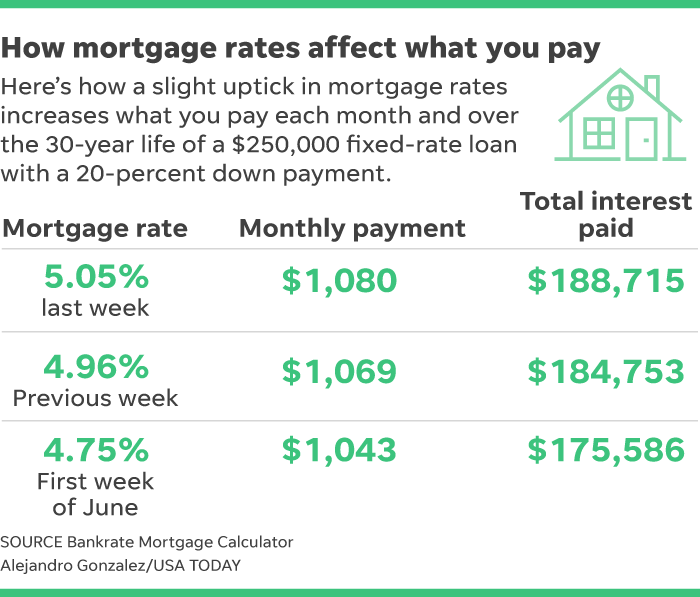
There are 2 types of home mortgage rate of interest: fixed rates and adjustable rates. Repaired interest rates remain the same for the entire length of your home mortgage. If you have a 30-year fixed-rate loan with a 4% rates of interest, you'll pay 4% interest till you pay off or refinance your loan.
What Does How Do Mortgages Work In The Us Mean?
Adjustable rates are interest rates that alter based on the marketplace. A lot of adjustable rate home loans begin with a set rates of interest period, which normally lasts 5, 7 or 10 years. Throughout this time, your rates of interest stays the exact same. After your set rate of interest duration ends, your rates of interest changes up or down as soon as annually, according to the marketplace.
ARMs are ideal for some customers. If you plan to move or re-finance prior to completion of your fixed-rate duration, an adjustable rate home loan can provide you access to lower interest rates than you 'd generally find with a fixed-rate loan. The loan servicer is the company that's in charge of supplying monthly mortgage declarations, processing payments, managing your escrow account and reacting to your inquiries.
Lenders might offer the maintenance rights of your loan and you might not get to choose who services your loan. There are numerous types of mortgage. Each comes with different requirements, rate of interest and advantages. Here are a few of the most typical types you might hear about when you're looking for a mortgage.
You can get an FHA loan with a deposit as low as 3.5% and a credit rating of just 580. These loans are backed by the Federal Housing Administration; this suggests the FHA will compensate lending institutions if you default on your loan. This minimizes the risk loan providers are handling by lending you the cash; this means lending institutions can offer these loans to customers with lower credit scores and smaller sized down payments.
Conventional loans are often likewise "conforming loans," which suggests they satisfy a set of requirements specified by Fannie Mae and Freddie Mac 2 government-sponsored enterprises that buy loans from lenders so they can give home loans to more people. Traditional loans are a popular choice for buyers. You can get a traditional loan with as low as 3% down.
Not known Details About Who Took Over Taylor Bean And Whitaker Mortgages
This adds to your month-to-month expenses but permits you to enter into a brand-new house faster. USDA loans are just for homes in qualified backwoods (although numerous houses in the suburban areas qualify as "rural" according to the USDA's definition.). To get a USDA loan, your household income can't surpass 115% of the area mean earnings.
For some, the assurance costs required by the USDA program cost less than the FHA home loan insurance premium. VA loans are for active-duty military members and veterans. Backed by the Department of Veterans Affairs, VA loans are a benefit of service for those who have actually Additional info served our nation (which of the statements below is most correct regarding adjustable rate mortgages?). VA loans are a great choice since they let you buy a house with 0% down and no personal mortgage insurance.
Each monthly payment has four major parts: principal, interest, taxes and insurance. Your loan principal is the quantity of cash you have left to pay on the loan. For example, if you borrow $200,000 to buy a home and you pay off $10,000, your principal is $190,000. Part of your month-to-month home mortgage payment will automatically go towards paying down your principal.
The interest you pay each month is based on your rate of interest and loan principal (which of the statements below is most correct regarding adjustable rate mortgages?). The cash you pay for interest goes directly to your home mortgage supplier. As your loan grows, you pay less in interest as your principal decreases. If your loan has an escrow account, your monthly home mortgage payment might also include payments for real estate tax and house owners insurance.
Then, when your taxes or insurance coverage premiums are due, your lending institution will pay those expenses for you. Your home mortgage term describes for how long you'll pay on your home loan. The two most typical terms are 30 years and 15 years. A longer term normally means lower month-to-month payments. A shorter term usually suggests bigger monthly payments however huge interest savings.
What Is The Interest Rate On Reverse Mortgages Things To Know Before You Buy
In the majority of cases, you'll require to pay PMI if your down payment is less than 20%. The cost of PMI can be included to your monthly mortgage payment, covered by means of a one-time upfront payment at closing or a combination of both. There's likewise a lender-paid PMI, in which you pay a somewhat greater interest rate on the home loan rather of paying the monthly charge.
It is the written promise or agreement to pay back the loan utilizing the agreed-upon terms. These terms consist of: Rates of interest type (adjustable or fixed) Interest rate portion Quantity of time to repay the loan (loan term) Amount obtained to be paid back in complete Once the loan is paid in full, the promissory note https://www.liveinternet.ru/users/rothes2k1l/post473983412/ is returned to the customer.
As soon as you discover a home and make a deal, it's time to apply for your new home loan. Protecting the ideal home mortgage is important to your monetary stability and lasting success when it pertains to your brand-new house. It is very important to understand how mortgage work, what types of home mortgages you can have, and how each type of home loan might affect your financial future - how long are mortgages.